
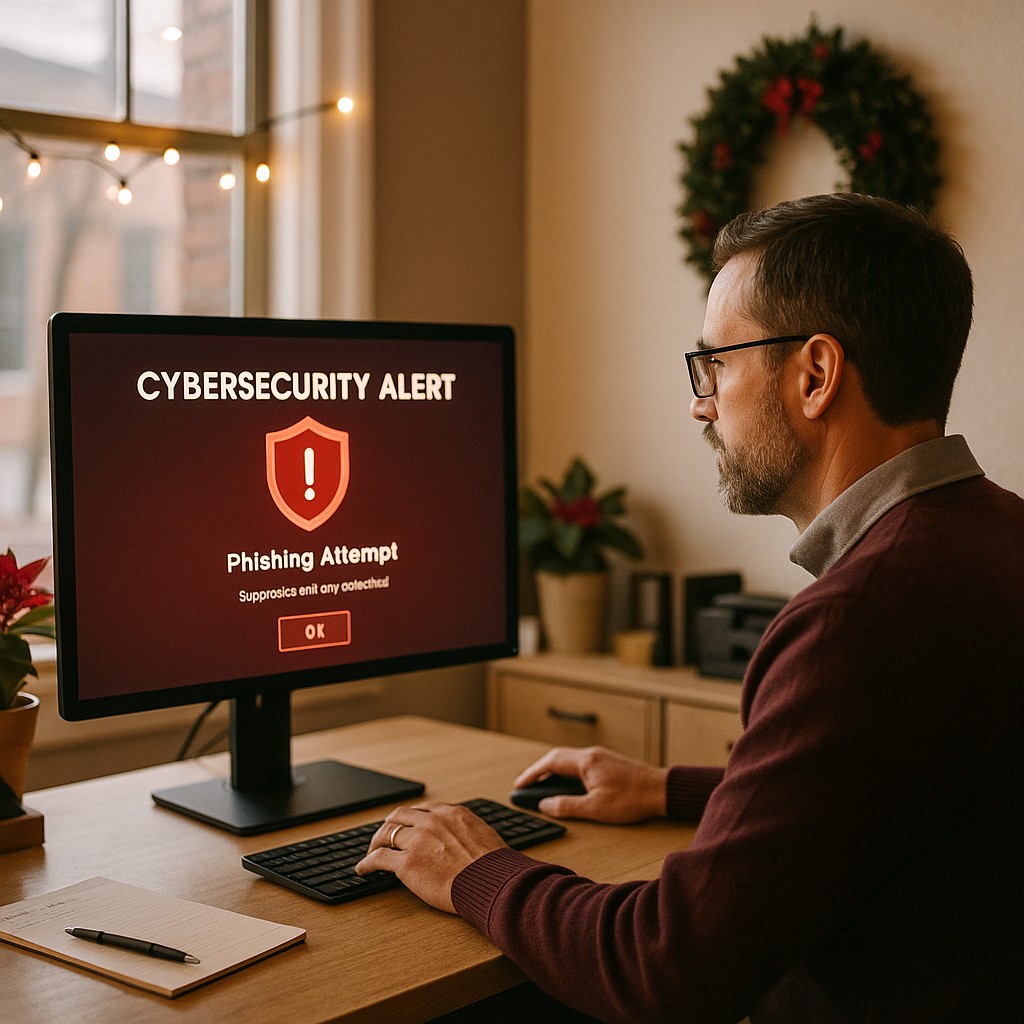
Why Small Business Cybersecurity Matters More During the Holidays
Holiday cyber risks for small businesses are growing heavier than ever as we approach the end of 2025.
While most small businesses focus on finishing the fiscal year, hackers are taking advantage of increased online traffic, staff vacations, and end-of-year transactions by launching sophisticated phishing campaigns, ransomware attacks, and vendor fraud.
According to the Verizon 2025 Data Breach Investigations Report, 43% of all breaches target small businesses, and the average incident costs over $150,000 in recovery, downtime, and reputational damage.¹
The combination of distracted employees, unpatched systems, and heavier transaction volumes makes November and December peak season for cyberattacks — and one unguarded click can halt operations.
This article outlines the leading holiday cyber risks for small businesses in 2025 and the practical actions you can take to secure your systems before the year ends.
1. The Holiday Threat Landscape for Small Businesses
Hackers know that year-end is when small businesses are stretched thin — making it the perfect time to exploit human error and outdated defenses.
The following are the most prevalent threats discussed across industry forums, Reddit’s r/sysadmin and r/smallbusiness, and cybersecurity briefings:
Phishing & Business Email Compromise (BEC)
Cybercriminals impersonate suppliers, clients, or executives to request fake payments or data.
- FBI IC3 2024 reports over $2.7 billion in BEC losses, most from small to mid-sized organizations.
- Attackers now use AI to replicate writing styles and company branding with near perfection.
Ransomware
Ransomware remains the most damaging cyber threat for small enterprises.
- Sophos’ State of Ransomware 2025 found that 73% of small businesses faced at least one ransomware attempt this year.
- Attackers often exploit outdated servers or remote desktop access.
Invoice & Payroll Fraud
During the holiday rush, fraudsters send false invoices or payroll adjustment requests.
Reduced oversight and overworked accounting teams increase risk.
Insider & Seasonal Staff Risks
Temporary or untrained employees may unknowingly expose data or credentials.
Holiday hiring spikes expand the attack surface for internal mishandling.
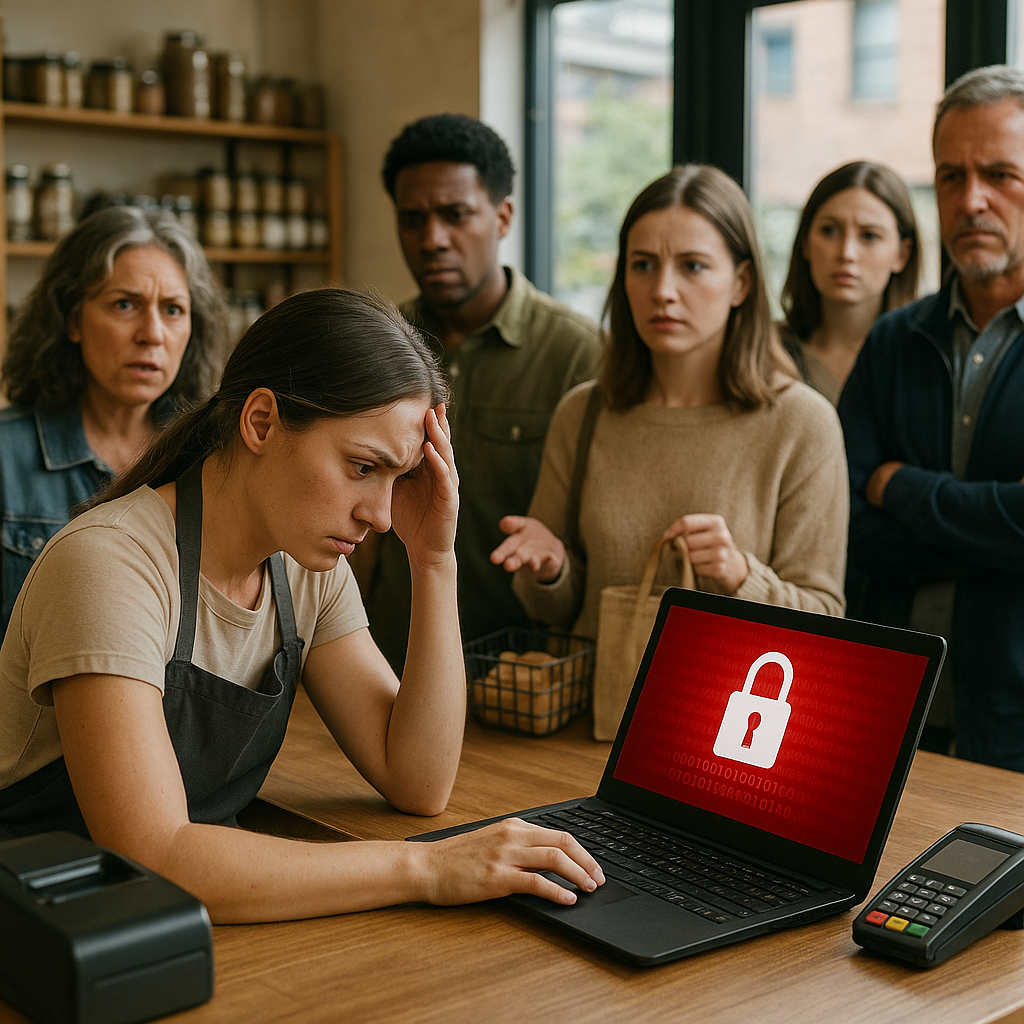
2. Why Holiday Timing Increases Cyber Risk
Three key operational factors converge in Q4:
- Increased Transactions – More sales and vendor payments mean more digital communication and exposure points.
- Reduced IT Oversight – Vacations and short-staffed teams delay patching or incident response.
- High Social Engineering Success – Employees are rushed, distracted, or operating remotely, making them 30% more likely to click phishing links.
Hackers understand this behavioral pattern — and plan their attacks accordingly.
3. Five Critical Steps to Secure Your Business Before the Year Ends
These proven measures reduce breach probability and help businesses meet compliance requirements.
1. Patch Systems and Software
Unpatched vulnerabilities remain the #1 entry point for ransomware.
- 60% of breaches in 2025 involved known, unpatched flaws.
Schedule a company-wide update before Thanksgiving and automate future patching.
2. Test and Verify Backups
A backup is only as good as its last successful restore.
- 41% of small firms that paid ransomware still failed to recover all their data.
Ensure both on-site and cloud backups are current and test a full restore this month.
3. Enable Multi-Factor Authentication (MFA)
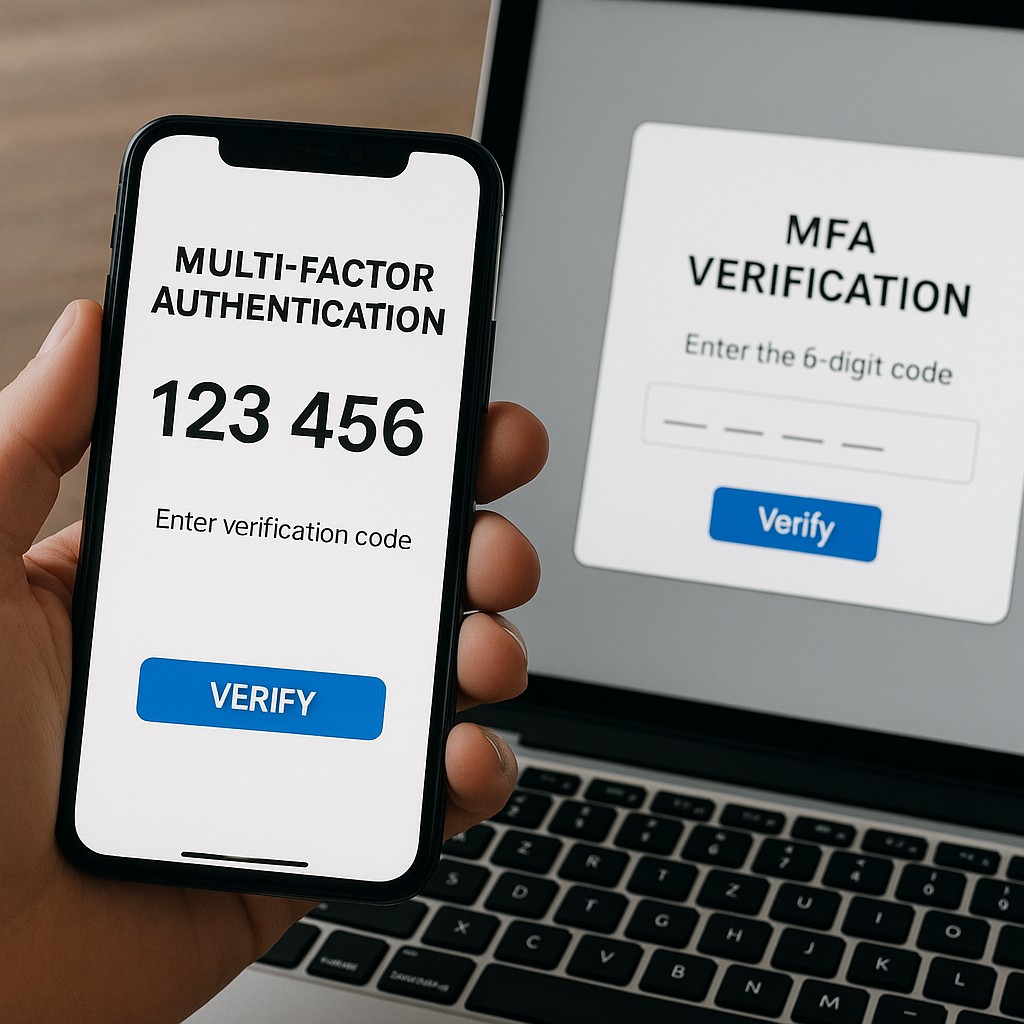
- Microsoft reports that MFA stops 99% of account compromise attempts.
Apply MFA to email, admin portals, cloud platforms, and financial systems.
4. Conduct a Quick Employee Security Refresher
Short, focused training can prevent costly mistakes.
- 74% of breaches still involve the human element, according to Verizon’s report.
Hold a 20-minute phishing awareness refresher before the holiday rush.
5. Review User and Vendor Access
Remove outdated or unnecessary accounts — especially for seasonal staff or third-party vendors.
Least-privilege access helps contain potential breaches and ensures compliance.
4. The Rising Role of AI in Both Attacks and Defense
In 2025, generative AI became both a tool for attackers and defenders.
Hackers use large language models to craft convincing phishing emails, but cybersecurity teams now use Retrieval-Augmented Generation (RAG) systems to identify emerging threats in real time.
For small businesses, this means:
- Threat detection tools powered by AI can analyze behavior patterns and flag anomalies faster.
- However, AI’s use by attackers makes employee skepticism more important than ever — malicious emails now look professional, grammatically correct, and “authentic.”
Crossaction recommends integrating AI-informed monitoring or managed security services that leverage RAG-style data checks for local businesses in Utah.
5. End-of-Year Security Checklist for Small Businesses
Before you close for the holidays, complete this quick year-end cybersecurity review:
| Task | Why It Matters |
| Patch all devices, servers, and POS systems | Prevent exploit of known flaws |
| Verify data backups and run a restore test | Ensure fast recovery after incident |
| Enable MFA for all users | Block credential theft |
| Revoke access for ex-employees/vendors | Limit insider threats |
| Remind employees about phishing signs | Stop scams before they start |
| Confirm 24/7 monitoring or alerts | Detect issues over holiday downtime |
6. Cost of Ignoring the Risk
The cost of inaction continues to climb.
- The average downtime cost from a cyber incident for SMBs is $430,000, and recovery can take 16+ days.
- 60% of small businesses close within six months of a severe cyberattack.
These figures illustrate that cybersecurity isn’t just an IT problem — it’s a business continuity issue.
7. Plan Your 2026 Security Strategy Now
Before the holiday distractions take over, allocate time and budget for 2026 security initiatives:
- Conduct a formal risk assessment or penetration test in Q1.
- Upgrade outdated firewalls or endpoint protection.
- Implement centralized password management.
- Consider partnering with a managed IT provider like Crossaction to automate updates, monitoring, and employee training.
Proactive investment now prevents expensive emergencies later.
Secure the Season, Protect Your Future
Small business cybersecurity isn’t seasonal — but criminals treat the holidays as opportunity season.
Taking a few decisive actions today — patching, backing up, training, and auditing — can save your company months of recovery and lost trust.
If your Utah business needs a professional year-end security audit, vulnerability scan, or ongoing managed IT protection, Crossaction can help.
Our experts specialize in small-business cybersecurity built for reliability, compliance, and peace of mind — so you can close the year strong and start 2026 with confidence.