

Small businesses in Ogden, Utah face rising cyber threats that can cripple their operations. While major data breaches at large corporations grab headlines, local small businesses are also increasingly targeted by cybercriminals who know these companies hold valuable data but often have fewer security defenses. In fact, over 43% of cyberattacks target small businesses, yet only 14% of those firms are prepared to defend against them. This lack of preparedness can be fatal – an estimated 60% of small businesses fail within six months of a serious cyber attack.
Ogden’s thriving business community must take cybersecurity seriously. The city’s growing tech sector and proximity to Hill Air Force Base and other government installations mean even small firms face heightened risks from sophisticated threat actors. Ogden is also a hub for outdoor recreation gear, manufacturing, and healthcare companies, which handle sensitive customer and proprietary data that require strong protection. Yet many local businesses operate with tight IT budgets and lack dedicated security staff, creating a skills gap that leaves vulnerabilities unaddressed.
Local reports indicate increasing attempts of ransomware, phishing, and business email compromise targeting Ogden-area organizations. In this environment, cybersecurity threat detection is not just an IT concern – it’s a fundamental business necessity to protect your operations, reputation, and bottom line.
Why Proactive Cybersecurity Threat Detection Matters
Cyber threats are not a distant possibility in Utah – they are happening every day. In fact, a cyber incident is reported in Utah roughly every 76 minutes, and it’s not just big companies being hit. Cybercrime is an everyday reality affecting organizations of all sizes; even local clinics, school districts, and small municipalities have felt the impact. This means small and mid-sized businesses in Ogden cannot assume “it won’t happen to us.”
Taking a reactive approach – waiting until a virus or breach occurs before responding – is a recipe for disaster. Without a full-time security team, many smaller firms only discover a breach after money is missing or systems are locked down. By then, the damage is done. Moreover, a cyberattack can scare away your customers; 55% of consumers say they are less likely to do business with a company that has been breachednexusitc.net.
By contrast, a proactive approach with real-time threat detection lets you catch intrusions early (or even prevent them) so you can neutralize threats before they wreak havoc. In the proactive vs reactive cybersecurity debate, investing in prevention saves time and money in the long run. The goal is to stay one step ahead of malicious actors rather than constantly putting out fires. Proactive cybersecurity threat detection can mean the difference between a minor security incident and a full-blown crisis that could shut your doors for good.
Real-Time Cybersecurity Threat Detection Tools for Small Businesses
Cybercriminals often strike when businesses least expect it—after hours or during holidays when staff are offline. In fact, a staggering 91% of ransomware attacks are deployed outside of regular 9–5 business hours. This pattern underscores the need for constant vigilance through 24/7 monitoring.
Modern cybersecurity tools now make real-time threat detection feasible even for small businesses. With 24/7 monitoring, a combination of automated systems and security professionals keeps watch on your network day and night. Suspicious activity can be spotted immediately, whether it’s noon on a Tuesday or 2 A.M. on Christmas Day. This constant vigilance is crucial because hackers don’t keep business hours – if a breach starts at night, you need to know right away.
Another key capability is behavioral analysis. Advanced threat detection solutions use machine learning to learn what “normal” behavior looks like for your users and systems, then alert on anomalies. This means even subtle signs of an intrusion – say, an employee account accessing large files at odd hours – will be flagged as suspicious, whereas traditional security tools might overlook it. Behavioral analytics provides a proactive layer of defense, detecting unusual patterns and potential threats that signature-based anti-virus alone might miss.
Equally important is instant alerting and response. The best cybersecurity threat detection systems don’t just log threats; they actively alert your IT team or security provider the moment something is amiss. Rapid alerts coupled with a solid incident response plan enable you to contain threats before they spread. As one guide notes, real-time alerting is paramount – threats are flagged immediately, but detection is just the start. You need swift action following an alert to prevent a full-blown breach. In practice, this could mean automatically isolating an infected computer or disabling a compromised user account as soon as an alert comes in.
To summarize, here are some of the key features of modern cybersecurity threat detection solutions that help Ogden businesses stay safe:
- 24/7 Monitoring: Continuous network surveillance ensures attacks are caught at any hour, not just during the 9–5 workday. Round-the-clock monitoring means threats can’t hide during nights, weekends, or holiday downtime.
- Behavioral Analysis: Machine-learning algorithms establish a baseline of normal user and system behavior and flag deviations. This proactive approach provides a crucial extra layer of security by spotting insider threats or novel attack patterns that traditional tools might miss.
- Instant Alerts & Response: Real-time alerts notify your team (or your security provider) the moment a threat is detected, enabling quick action to contain damage. Fast response is critical – if malware is detected, the system can immediately trigger defenses and response steps to limit downtime.
In-House vs. Managed Threat Detection: Choosing the Right Approach
As a small business owner, you might wonder whether to handle cybersecurity threat detection in-house with your own IT staff or to partner with a managed IT service provider. This decision will impact your security effectiveness, costs, and peace of mind. One Utah cybersecurity resource pointedly asks: “What are your vulnerabilities? How will you address them — with the staff you have or by outsourcing?”. In other words, do you have the resources to effectively do it yourself, or should you leverage outside expertise?
Let’s compare doing it in-house vs. using a Managed Service Provider (MSP) for threat detection in an Ogden small business:
| Factor | In-House (DIY) | Managed IT Service (MSSP) |
| Coverage & Monitoring | Likely limited to business hours. Off-hours attacks might go unnoticed until the next workday. | 24/7 monitoring is provided, including nights, weekends, and holidays. Threats are observed and responded to in real time, no matter when they occur. |
| Expertise & Staffing | Relies on your internal team, who may not be cybersecurity specialists. Small IT teams can be stretched thin and may miss advanced threats. | Access to a dedicated team of security experts with specialized skills. The provider’s SOC analysts continuously watch for threats and know how to handle complex attacks. |
| Tools & Technology | You must purchase, deploy, and manage security tools (e.g. firewalls, SIEM, endpoint protection) on your own. Keeping these tools updated and tuned is your responsibility. | Enterprise-grade threat detection tools are included as part of the service. The MSP maintains and updates the software and hardware, ensuring you always have the latest defenses without the upkeep burden. |
| Response Time | If an attack happens after hours or when IT staff are busy, response could be delayed until someone notices. Containing and recovering from an incident may take longer with limited in-house resources. | The MSP’s team is alerted instantly when something is wrong and can often begin incident response within minutes. Faster containment means less damage and downtime during a cyber incident. |
| Cost & Resources | Requires significant investment in software licenses, hardware, and possibly hiring/training security personnel. Ongoing costs for salaries and tools can strain a small business budget. | Typically a predictable monthly fee. You avoid large upfront costs and get access to top-tier security talent and tools. Economies of scale mean a provider can protect you at a lower cost than building the capability in-house. |
For many Ogden businesses, outsourcing to a managed security service offers greater protection and value. You effectively gain a full security operations center at a fraction of the cost of staffing one internally. Without full-time security staff, a company might not realize it’s been breached until after the damage is done – but with an MSP monitoring your systems, threats are much more likely to be caught and remediated immediately.
Additionally, a good managed provider will implement critical safeguards (firewalls, endpoint protection, patch management, employee security training, etc.) that dramatically reduce the chance of a successful attack disrupting your operations. Instead of trying to juggle cybersecurity on your own, you can focus on running your business while experts handle the complex threat detection and defense duties.
Reducing Risk and Downtime with Managed Services
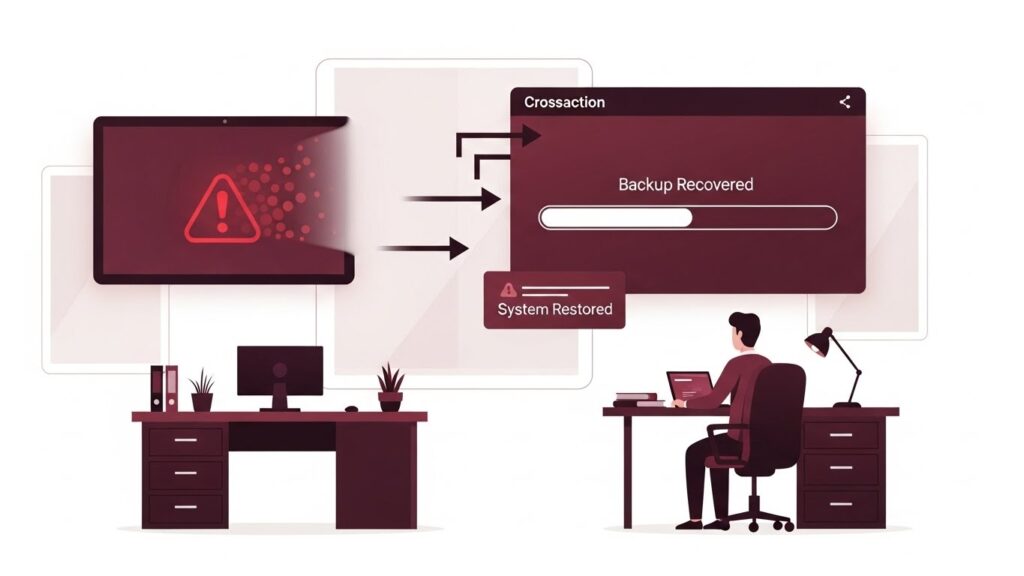
Cyberattacks don’t just steal data – they can also cause costly downtime for your business. When systems go down or data is locked up by ransomware, every minute counts. Research shows that IT downtime costs small businesses between $137 and $427 per minute on average. That means even an hour or two of downtime could cost tens of thousands of dollars in lost productivity, sales, and recovery expenses.
Managed IT services help minimize this risk in several ways. First, proactive monitoring and maintenance catch issues early. By detecting and fixing security weaknesses or system glitches before they escalate, a managed provider can prevent many outages and breaches from ever happening. It’s much cheaper (and easier) to stop an attack or plug a vulnerability in advance than to deal with a full-blown crisis.
Second, if a cyber incident does occur, a managed service ensures you have a disaster recovery plan in place. Providers regularly back up your data and have strategies to restore systems quickly. So if ransomware strikes or a server fails, you can recover your information and be back online in hours or even minutes, not days. This level of preparedness drastically reduces downtime and keeps your business running.
In short, partnering with a managed IT security service means lower risk and less downtime. You gain both preventive security and rapid response capabilities that would be hard to maintain on your own. For a small business that can’t afford long interruptions or hefty recovery costs, this proactive approach provides real peace of mind.
Secure Your Ogden Business Today
Cyber threats aren’t slowing down, and small businesses in Ogden are squarely in the crosshairs. The good news is you don’t have to tackle this challenge alone. A professional threat assessment is a smart next step to evaluate your current defenses and identify gaps. Don’t wait until a cyberattack strikes – take action now to protect your company’s future.
Crossaction is here to help local businesses strengthen their cybersecurity. Our team understands the Ogden threat landscape and the needs of small to mid-sized companies. Contact Crossaction today to schedule a comprehensive cybersecurity threat assessment. We’ll work with you to implement real-time threat detection and proactive monitoring solutions that reduce risk, minimize downtime, and keep your business running securely. Act now to stay one step ahead of cyber threats and safeguard your Ogden business.